
Expansion to Germany
Scale your company into Germany, the EU and the DACH region — with expert legal guidance at every step.










"Ready to expand into Germany or the EU? Our Germany desk has guided dozens of Swiss and international companies through the process — book a call with me and my team."
Nadine Saalbach · Partner @ LEXR Germany · Book your free call →
How we solve your challenges
Our experts in German and EU law clarify all open legal questions and ensure a quick, legally secure implementation of your expansion strategy.
Together with you we will find the best solution for your company form in Germany and the EU. We support you in founding a subsidiary, establishing a German limited liability company (GmbH) or setting up a branch office — advising on the corporate, tax and VAT implications of each option.
While the regulatory density in the EU is well-known, uniform regulation also opens the door to the entire EU market from a single foothold. Our team has experts in EU financial market law, GDPR data protection, the AI Act and digital services — to plan and implement your EU market entry without costly surprises.
Whether you are hiring employees, cross-border commuters or freelancers in Germany, German labor law is considerably more complex than Swiss law — not only in terms of protection against dismissal. With our HR experts on your side, you avoid costly misclassifications and ensure compliant employment contracts from day one.
We incorporate the specifics of German GTC law and contract law into your legal documents in a customized manner. With legally secure contracts that respect consumer rights — including the statutory right of withdrawal — you can build successful business relationships in Germany. In B2B, we often recommend a Swiss-law clause to benefit from its less restrictive GTC regime.
Our tax experts help you with questions about German and EU tax law and plan cross-border taxation between Switzerland and Germany — covering VAT registration, permanent establishment risk and optimal holding structures.
How we deliver Germany Expansion, AI-amplified
Matter in
Brief us in plain language — we scope it and route it to the right specialist.
Intake < 4hAI does the heavy lifting
Our own AI stack drafts, reviews and cross-checks — inside privilege.
60% fewer draft cyclesSenior lawyer signs off
The specialist who built the strategy reviews and signs every output.
 Lars Fidan
  Stephan Meyer Nadine Saalbach
 Output delivered
On scope, on the quoted price — delivered into your workflow.
Scope and price are fixed in writing before we start — AI absorbs the lift, not your budget.
Our Germany expansion services
One cross-border team covering every legal dimension of your move into Germany and the EU.
Start the EU expansion in 3 easy steps
Free Initial Consultation
Get to know our Germany & EU experts. We give you an initial assessment of complexity for your industry and outline concrete next steps.
Book your free call →Germany Expansion Planning
Together we set goals, prioritize the most important topics and determine a schedule for your expansion into Germany and the EU.
Book your free call →German GmbH Incorporation
End-to-end company formation in Germany — advice on structure, notarized documentation and registration with the commercial register.
Book your free call →Legal Team Subscription (DE)
A dedicated Germany-desk expert plus access to 30+ specialists covering corporate, regulatory, contracts, HR and IP across CH, DE and the EU.
Book your free call →Why LEXR
Deep Germany & EU expertise
Our Berlin and Munich teams live and breathe German and EU law — from GmbH incorporations and GDPR compliance to German labor law and GTC drafting. One team, cross-border fluency.
Transparent, predictable costs
Peace of mind with flat-fee packages. Transparent pricing lets you plan your expansion budget without unexpected hourly bills — financial clarity from first consultation to implementation.
Fast and efficient execution
Expansions move fast. We leverage advanced drafting tools to deliver compliant German legal documents quickly, while senior lawyers focus on strategy, structure and your specific business model.
Expansion to Germany FAQ
The questions Swiss founders and businesses ask us most before expanding to Germany.
As part of the EU, the German market is generally more heavily regulated than the Swiss market. However, strict German regulation also opens doors: an expansion to other EU countries with less strict regulation becomes an easier step, and often the entire EU market can be served from Germany. The most important issues that affect almost every company are data protection (GDPR), consumer protection and competition regulations. In addition, there are industry-specific regulations, e.g. in finance, insurance or medical devices.
Intellectual property is protected in Germany in a similar way to Switzerland. Trademarks and patents registered in Switzerland are only protected in Switzerland — for protection in Germany or the EU they must also be registered in the German Patent and Trademark Office (DPMA) or the EUIPO. Copyrighted works are protected in Germany automatically without registration. Technical inventions are most effectively protected by a patent application or, faster and cheaper, as a utility model.
In the B2B sector, caution is required when including general terms and conditions: the counterparty's GTCs can automatically take precedence if sent with an offer and not actively objected to. German courts also tend to apply consumer-friendly GTC interpretation even in B2B contexts. In the B2C sector with German consumers, Swiss law cannot simply be chosen — the choice-of-law clause must guarantee the more favorable domestic law for the consumer. GTCs must be updated regularly in line with German case law.
Job descriptions must be written carefully to avoid discrimination claims. Minimum wage rules apply, including for most interns. Fixed-term employment contracts must be signed by hand, otherwise they convert to indefinite-term contracts. When engaging freelancers, false self-employment is the biggest risk — reclassification by the German pension insurance fund can trigger substantial back-payments of social security contributions and taxes, plus criminal consequences.
In companies with ten or more local employees, strict dismissal rules apply: any ordinary termination requires a legitimate reason — operational, personal or behavioural. Behavioural terminations require a prior formal warning. Every notice of termination must be signed by hand; termination by email is invalid in Germany. Extraordinary (summary) terminations also require a legitimate reason and must be carefully documented.
Virtual participation plans (VSOPs) are the prevailing model in Germany. Unlike real share options, VSOPs are only taxable when a liquidity event occurs and the employee receives cash — avoiding tax liability before any money flows. Real share transfers in a German GmbH must be notarized, making VSOPs administratively simpler. We support you in rolling out a German or cross-border employee participation programme tailored to your structure.

Let's get started
Book your free call and take the first step towards your German expansion.
Dive deeper into expanding to Germany & the EU
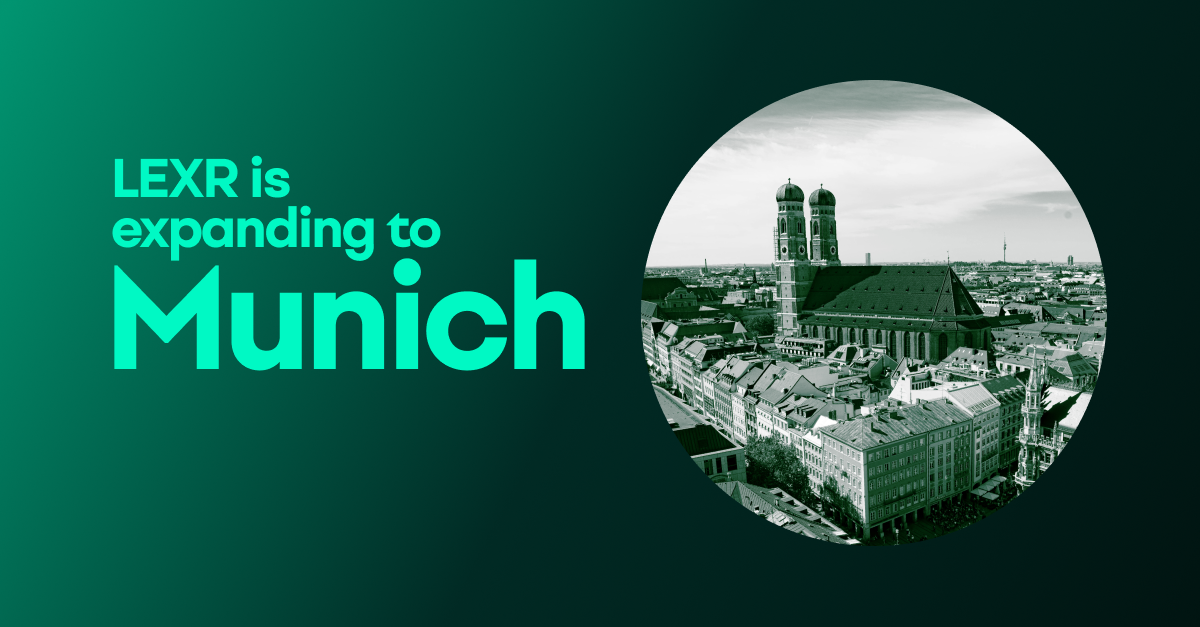 NewsInternational Legal Advice for Tech Companies: LEXR Opens Office in MunichRead more →
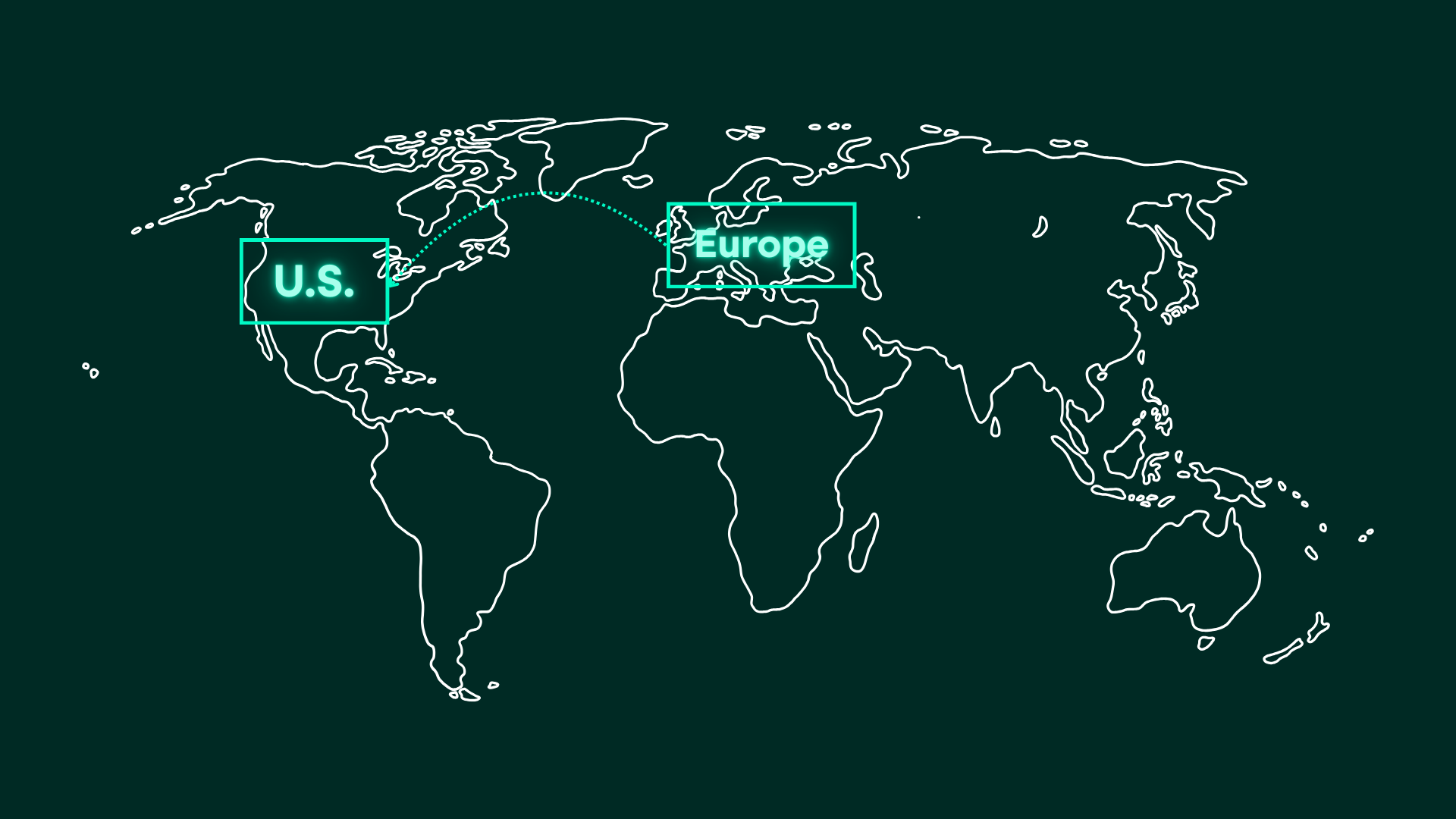 StartupsEstablishing a U.S. Presence: Initial ConsiderationsRead more →
 StartupsChoosing the Right U.S. Entity: C-Corp vs. LLC for European StartupsRead more →
 US ExpansionExpanding to the US: Legal Essentials for European Tech FoundersRead more →